A Practical Guide to Family Petitions and Adjustment of Status in Florida
Family Petition + Adjustment of Status in Florida: A Practical Overview
Let's explore the journey of reuniting families through family petitions and the adjustment of status in Florida. We’ll walk through eligibility criteria and required documentation, ensuring you're well-prepared for each step. We’ll also discuss common challenges and share practical solutions. With our guidance, navigating this intricate process can be more manageable and lead to successful outcomes. Ready to embark on this journey with us?
Understanding Family-Based Immigration Petitions
Family-based immigration petitions are the cornerstone of reuniting loved ones across borders. They allow us to bring our family members closer, bridging the gap that geography often imposes. These petitions enable U.S. citizens and lawful permanent residents to sponsor eligible relatives, creating a pathway for them to join us in the United States.
We know how crucial these petitions are when it comes to keeping families together. They’re not just legal forms; they represent hope and connection. As we navigate through this process, it’s important to understand the various steps involved. From gathering the necessary documentation to submitting the petition, each action we take contributes to a future where families can share their lives and dreams without borders separating them.
Eligibility Criteria for Family Petitions
When considering family petitions, understanding eligibility criteria is vital for a successful process. We want to ensure that you're fully prepared and informed. First, let's identify the eligible relationships. U.S. citizens can petition for spouses, children, parents, and siblings. Permanent residents can petition for spouses and unmarried children.
Next, we must verify the petitioner's status. Are they a U.S. citizen or a lawful permanent resident? Their status directly affects the processing time and category. Also, the relationship must be genuine. Proof of relationship, like marriage certificates or birth records, is essential.
Lastly, financial capability is key. The petitioner needs to prove they can financially support the immigrant. This is done through an Affidavit of Support, ensuring the immigrant won't rely on public benefits.
Adjustment of Status Process in Florida
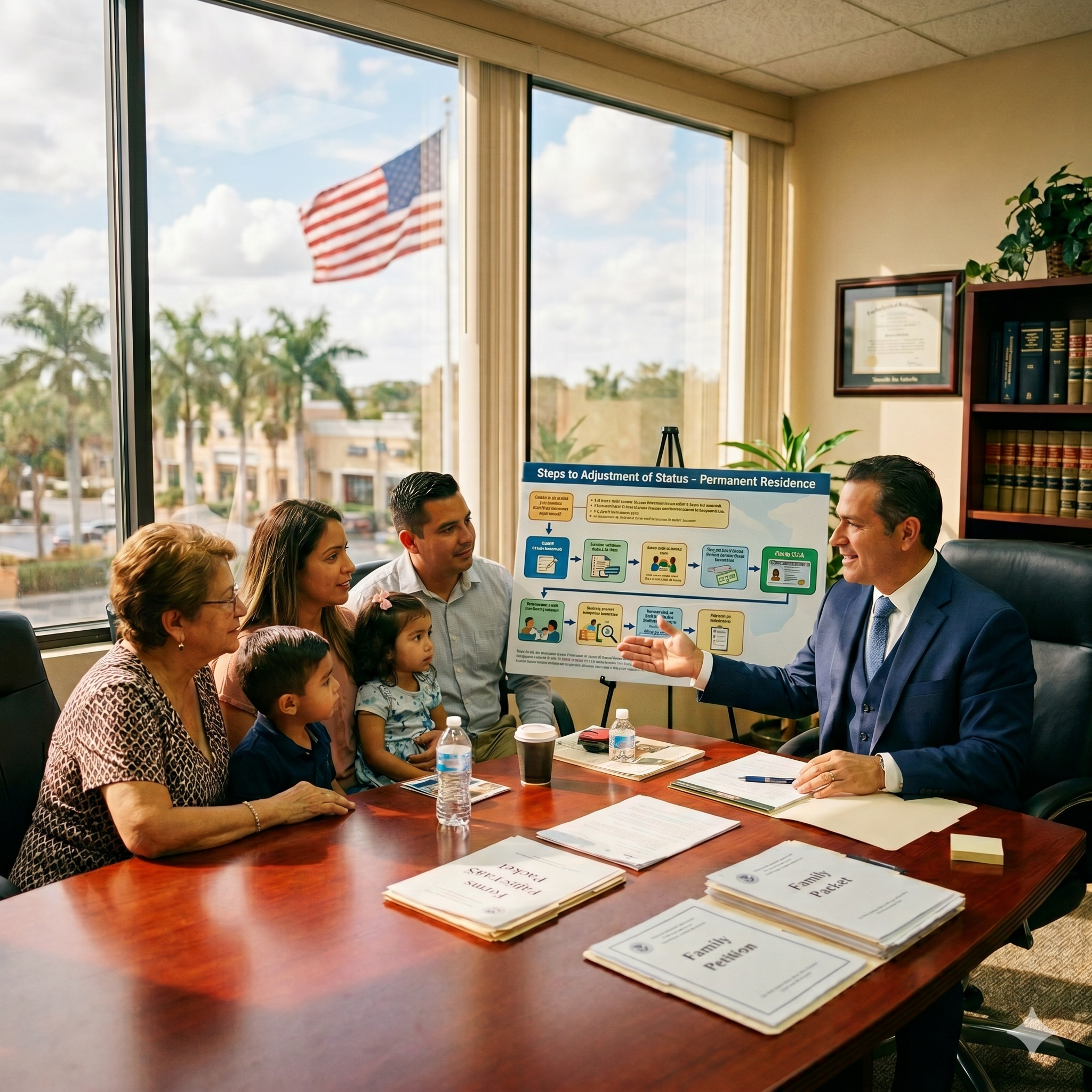
Navigating the adjustment of status process in Florida can seem complex, but breaking it down step-by-step makes it manageable. First, we need to ensure we’re eligible, usually through a family petition approval. Once that’s confirmed, we’ll file Form I-485, Application to Register Permanent Residence or Adjust Status. Timing is crucial, so we should check the Visa Bulletin for priority dates to ensure our category is current.
Next, we’ll need to attend a biometrics appointment, where they’ll collect our fingerprints and photos. USCIS might schedule an interview to verify our eligibility. During this interview, we need to be honest and prepared to answer questions about our relationship and background. If approved, we’ll receive our Green Card, marking a significant step in our immigration journey.
Required Documentation for Family Petitions and Adjustment of Status
As we move forward in our adjustment of status journey, gathering the required documentation becomes our next priority. First, we’ll need the family petition, typically Form I-130, submitted by our sponsor. Proof of our relationship, like a birth certificate or marriage license, is crucial. For adjustment of status, Form I-485 is essential, alongside our passport, two passport-sized photos, and any prior immigration documents. Let’s not forget the affidavit of support, Form I-864, from our sponsor to demonstrate financial capability. Evidence of lawful entry, like an I-94 travel record, is also critical. We should be ready to provide medical examination results, using Form I-693. This comprehensive documentation ensures we’re prepared, streamlining our path toward permanent residency.
Common Challenges and Solutions in the Immigration Process
Immigrating can be daunting, but understanding common challenges helps us overcome them effectively. One frequent issue is incomplete documentation, which can delay the process. We should double-check all forms and ensure we’ve included every necessary document before submission. Another challenge is meeting financial requirements. We need to verify that our financial sponsors meet the income thresholds to avoid complications. Additionally, long processing times can be frustrating. While we can't control this, tracking our application's progress online keeps us informed. Miscommunication may arise during interviews or correspondence with immigration officials. To mitigate this, we must prepare thoroughly for interviews and promptly respond to any requests. By staying organized and proactive, we can navigate these obstacles more smoothly.
In navigating the family petitions and adjustment of status process in Florida, we need to stay organized and attentive to details. It's crucial for us to gather the necessary documentation and prepare for potential interviews. By understanding the eligibility criteria and being proactive in addressing common challenges, we can increase our chances of reuniting with our loved ones. Let's approach this journey with determination and readiness, ensuring a smoother path toward achieving successful outcomes for our families.
